
Jonathan Hershaff
Data scientist and economist specializing in experimentation and observational causal inference. I also teach data scientists how to stand out in their interviews, from mid-level and senior through staff, from the case study to the past project deep dive and take-home challenges.
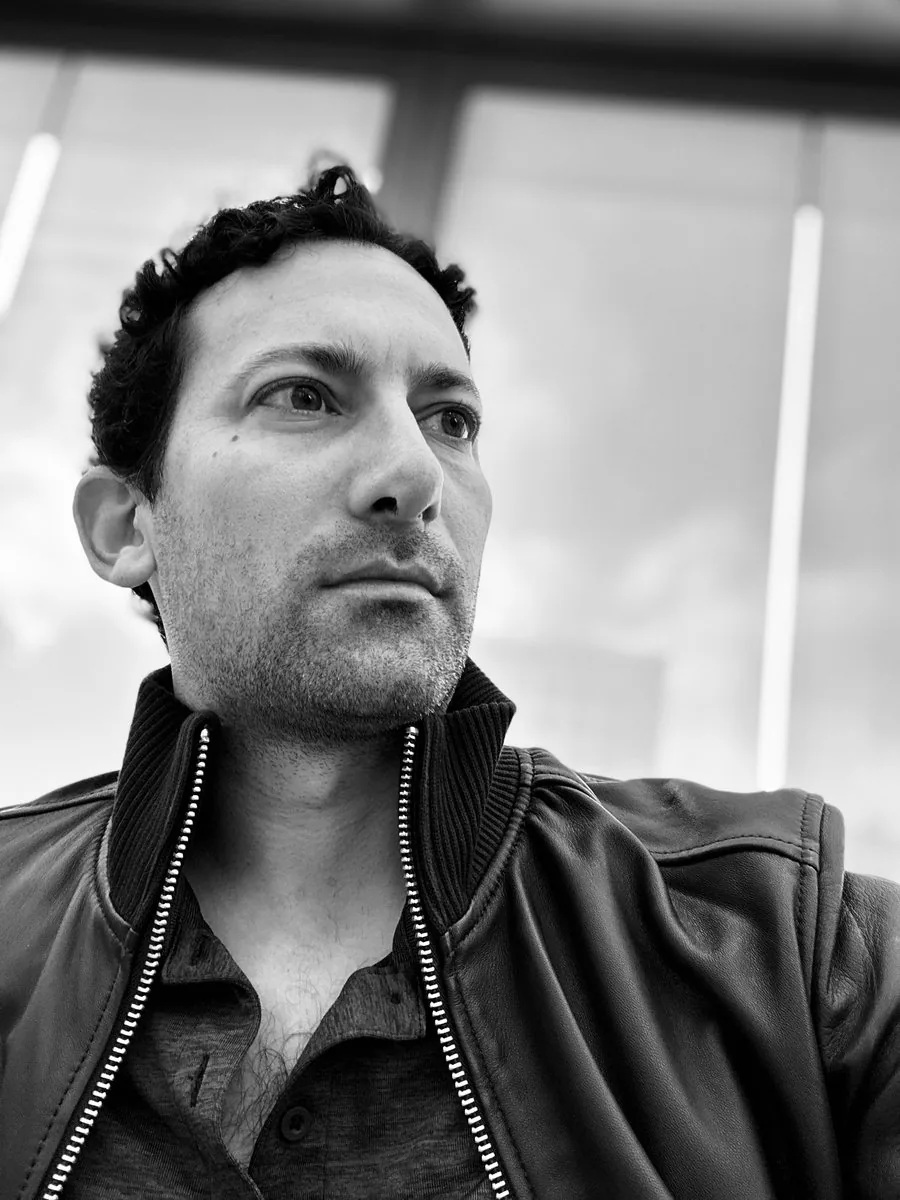
I have a PhD in economics from the University of Michigan and about ten years of post-graduate experience, six of them in tech. I have worked at Uber, Airbnb, and Stripe, and before that at the Federal Reserve and the Securities and Exchange Commission. I am currently in a full-time senior data science role.
I specialize in causal inference, answering the question “what’s the impact?” of product feature launches, marketing campaigns, or go-to-market strategies. Specifically, I often work on problems where standard experimentation is not feasible, using techniques such as switchback and geo-based experiments, difference-in-differences, synthetic control, and propensity score-based causal models.
Before tech, my research was cited in a winning US Supreme Court case, and I served as an expert economic witness, explaining investment adviser fraud to a grand jury. I have published in peer-reviewed journals and presented at economics and public policy conferences. Most of that work does not come up day to day, but it is where the habit of being careful about evidence came from.
Interview results for me and my clients
In 2021 I went 7 for 7 in final rounds, including Stripe, Meta, Amazon, Uber, and Robinhood. In 2023 I applied to one company, Airbnb, and had an offer within a week.
In April and May of 2026, I ran 80+ interview rounds in five weeks across sixteen companies. This time the market was much harder: layoffs and slower hiring at what had been the biggest employers of experimentation and causal inference talent left a far more experienced pool competing for every role. I converted 5 offers from 8 final rounds: senior at Uber, Google, and Meta, and staff at Figma and Attentive. I withdrew from the rest.
At that volume, the same patterns kept surfacing across companies, and I treated every round as material whether I passed it or not. I was my own harshest critic, and after each one I went back through the questions, worked out where my answers fell short, and rebuilt them. I converted 1 offer from my first 3 final rounds, which is not a bad rate on its own, and then 4 from my last 5 before withdrawing from four more finals. Nothing about my technical ability changed over those five weeks, only how I answered. That gap between knowing the material and answering well is what I teach, because it is where almost every strong candidate is actually losing.
I have also coached data scientists to offers at OpenAI, Google DeepMind, Google, Meta, Uber, Airbnb, Stripe, Apple, DoorDash, TikTok, Discord, and Etsy, across more than 100 mock interviews. Those sessions are the other half of my information: they tell me what companies are asking right now, not what they asked when I last looked.
The Udacity causal inference course
Udacity brought me in to build and teach their introductory causal inference course, covering difference-in-differences, event studies, synthetic control, and regression discontinuity. I wrote the lessons, the code, the practice problems, and the capstone project.
The course is applied rather than theoretical, so someone finishing it can run those methods on real data, use placebo tests to judge whether an estimate holds up, and interpret the coefficients without needing the proofs underneath. That is roughly the bar of an intro applied machine learning course, where you come out able to fit a model, tune it, and evaluate it honestly.
I earn nothing from it, since Udacity paid a fee up front with no residuals, and I am not an affiliate.
Working in public
Most of what I publish follows the same loop: read the paper or the documentation, simulate data where I control the ground truth, run the method, and report what actually happened. Simulation is the honest way to evaluate a causal method, because it is the only setting where you know the right answer in advance.
That has produced some inconvenient results, which are the ones worth publishing. A marketing mix model whose predictive fit improved while its ROAS estimates got steadily worse. A widely used synthetic control package returning far more false positives than it should. I would rather publish that than another framework post.
-
TikTok
-
LinkedIn
-
Instagram
-
YouTube
-
Substack
Write to me
Questions about the Playbook, coaching availability, pricing outside the US, or something I wrote. This reaches me directly, and I answer everything myself.
Working together
The Playbook covers the full interview loop and is where most people should start. If you want live reps on your own answers, I take a limited number of 1:1 sessions.